Tips for Safe Tree Removal
Ideally, the need to remove a tree will only come when it is deteriorating its ecosystem.
Ideally, the need to remove a tree will only come when it is deteriorating its ecosystem. We always hear about the importance of not cutting trees. But, when a tree has died, is growing close to something, or is leaning in a specific direction, it is best to ensure its surroundings’ safety in order to be safely removed.
Whether you are planning on removing it yourself or are hiring someone to do so, being familiar with the safety measures and getting access to the best equipment will reduce the risk of injury. Although this is a dangerous task where precautions and measures are strongly encouraged, there is still a risk of injury and hiring a professional for the job is the best option.
The primary step in tree removal is safety. It is not something to take lightly, and you should not continue unless you have followed all safety procedures. A couple of tips all professionals use for safe tree removal are:
Gear Up!
When working with a chain saw, professionals will wear a few essential safety gear items. Tree removal professionals must always have:
- Helmets
- Gloves
- Chainsaw protective clothing
- Goggles/ safety glasses
- Earplugs
- Work shoes
Be Aware of Power Lines
Arborists and other tree professionals always assume all power lines nearby are energized. They will contact the utility company and ask to turn off all ground lines before starting. For this, planning is necessary.
Check the Weather
Part of scheduling depends on the weather. Professionals will not remove a tree if there is wind, snow, or hail. Lousy weather is commonly known to cause risk, and it is a professional’s job to examine any possible hazard.
Consider Tree Size
Tree size will determine most factors, like the amount of preplanning and safety, the tool you will use, and the extra help you need from cables or people.
The Right Technique
All professionals follow a specific procedure to ensure the tree falls in the right direction and minimize risks. After clearing up the surroundings and estimating where it will fall, they will cut a notch into the tree and then place a wedge on the desire falling side to help with direction. We recommend that you have a watcher to help with any kickback limbs that can cause danger of fall or injury while cutting. Next, the tree will be dropped using a rope to guide it down, then limbs will be cleaned off, and finally the tree will be cut down into smaller pieces for transport.
Use the Right Equipment
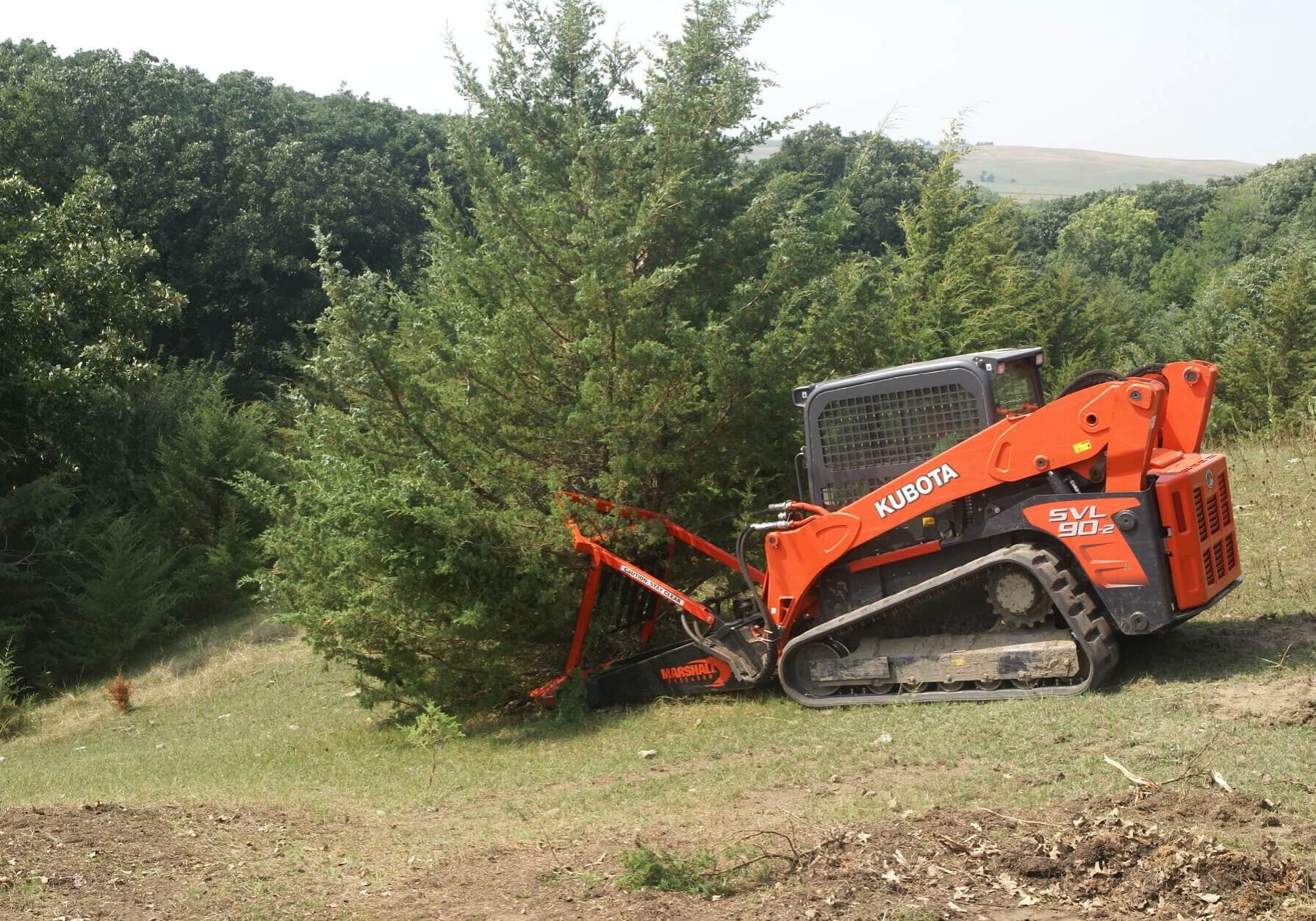
Professionals should make sure to use the right saw that will meet all tree cutting needs. Using the wrong type of saw and blade can ruin your tools and take longer than expected. For tree removal duties, no saw compares to our Marshall Tree Saws. Our low-maintenance, heavy-duty construction is the best for any homeowner or professional tree cutter. Our models allow you to operate quickly and efficiently, removing trees of any size and shape. For big trees, we recommend the model 1600; it is powerful and sharp, making it as fast and safe as possible. For smaller trees and homeowners, our 1200 model will help you with preciseness and efficiency.
5 Signs a Tree Should Be Removed
Land Clearing Attachments for Skid-Steer Loaders